Generosity Begins with Gratitude: A Conversation with Neila Baumiliene
As November 15, Lithuania’s National Philanthropy Day approaches, it is worth remembering that the well-being of society is built not only through individual achievements, but also through the willingness to share, recognize the needs of others, and take responsibility for what happens around us.
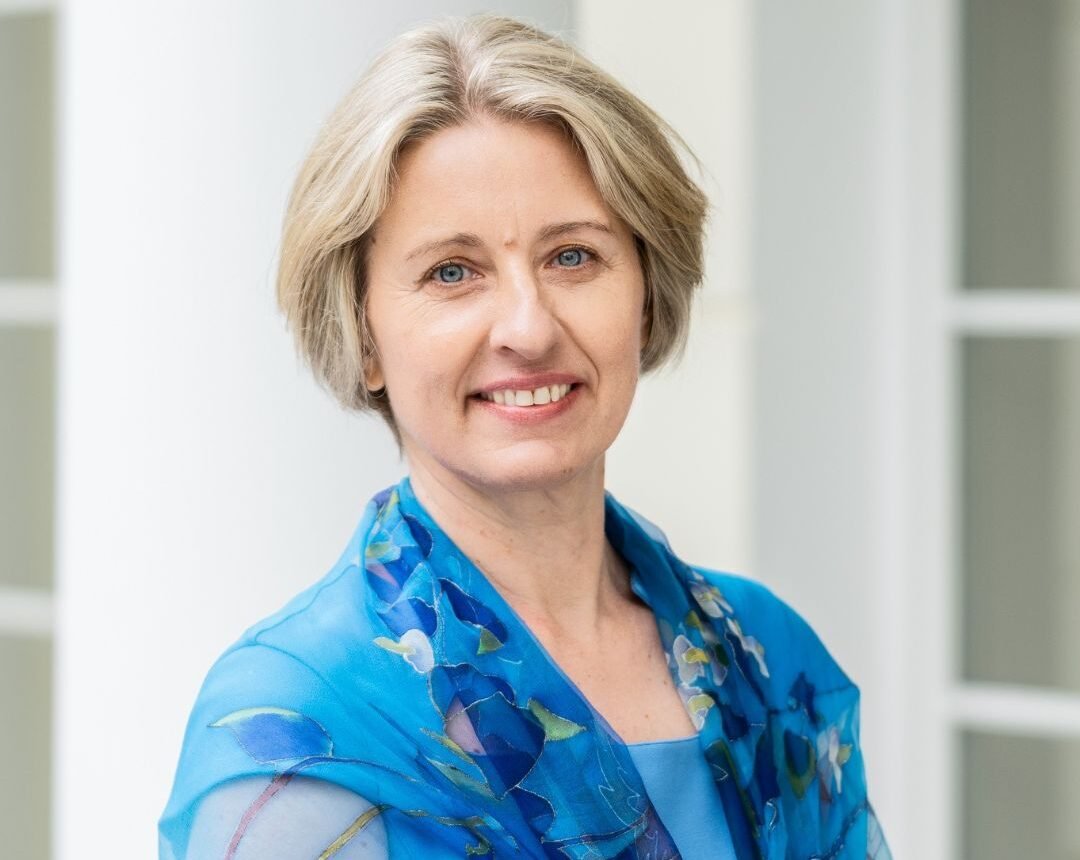
On this occasion, we spoke with Neila Baumiliene, Executive Director of the Kazickas Family Foundation in the United States. Our conversation explores how attitudes toward philanthropy in Lithuania have evolved over the past decades, the lasting changes that private initiatives can bring about, why generosity is not dependent on one’s financial means, and the role of the Lithuanian diaspora abroad in shaping the country’s future.
In your view, how has Lithuanian society’s attitude toward sharing, philanthropy, and responsibility for the common good changed over the past decades? Are we now more willing not only to build prosperity for ourselves, but also to help create opportunities for others?
Since Lithuania regained its independence, many changes have been made possible by the hard work and sense of responsibility of people living in Lithuania, Lithuanians who emigrated in the postwar years, and foreigners who saw value in helping Lithuania, as well as newer waves of emigrants who made sacrifices to support those who remained in the country. During the first two decades of independence, it was not customary in Lithuania to name a building, event, or scholarship after its benefactor or to display the date of the contribution. Such recognition was considered boastful or conceited, or people felt that “this is simply how things should be, because the world owes Lithuania.” The first visible signs of sponsorship were European Union signs along the highways. Although much support is still given anonymously, benefactors are now openly acknowledged. Generosity has become a visible and contagious example. Gradually, people began to see how their attention and support could positively affect the life of another person – often someone they did not even know—or make a difference in the affairs of a community or the country. They found meaning in sharing.
What kinds of change can be brought about by initiatives led by private individuals, families, and organizations – initiatives that governments or businesses may not always be able to undertake?
Civil society is always quicker to recognize problems and find solutions to them. Not every service society needs can be turned into a business, and government institutions cannot act until the necessary laws have been established. Through the sense of responsibility, compassion, patriotism, and active engagement of civil society, the country improves and remains strong.
The Kazickas Family Foundation has supported a wide range of initiatives in Lithuania for many years. What does it mean to you to see how support provided turns into lasting change? Is there a particular initiative or story that especially reflects this experience?
There are many stories and examples, but the most significant initiative was equipping Lithuanian schools with computers over several years in the early 2000s. With guidance from knowledgeable professors at Kaunas University of Technology (KTU), the Kazickas Family Foundation purchased 1,000 computer packages (a computer, modem, and printer), and teachers received training. At the same time, KTU launched an annual nationwide programming competition, which continues to this day. Building on this initiative, the Gates Foundation, together with the Ministry of Culture and the Martynas Mažvydas National Library of Lithuania, later helped computerize the country’s libraries and connect them through a unified online network. These initiatives did not happen on their own. They were made possible by the visionary and persistent efforts of the KFF’s late founder, Dr. J. P. Kazickas, and its current President, Jurate Kazickas. Although Lithuania already had a strong foundation in information technology before independence, the collaboration between Lithuanian professors and the Kazickas family helped lay the groundwork for the information technology sector to become one of the country’s fastest-growing economic drivers today.
What misconceptions about philanthropy and giving have you encountered throughout your work? Is there still a perception that only very wealthy people can make a meaningful contribution to society?
I encounter the mindset of victimhood less and less, as well as the belief that “I owe nothing to anyone, and no one will ever get anything from me.” Once, in New York, I was sitting in a conference room next to a businessman from Lithuania. We introduced ourselves. He was pleased that his daughter was studying in California and had received a scholarship for a year. We began talking about philanthropy. I explained that you do not need to establish a foundation to engage in philanthropy. For example, you can personally contribute to student scholarships at Lithuanian universities so that young people like his daughter have opportunities to develop. Many people in Lithuania can already afford to donate a few hundred euros a year toward such a cause. He looked at me in surprise and said, “Why should I do that? I have achieved everything in life on my own. No one has ever helped me or my family.” I was equally surprised and asked whether he was sure that no one had ever helped him, his parents, or his grandparents – and what about the scholarship his own daughter had received? I tried to convince him that, even with a scholarship, his daughter in California undoubtedly receives help from many people in her everyday life – out of generosity and kindness – and that, most likely, not one of them is a millionaire. I did not seem to convince him.
What advice would you give a young person today who wants to contribute to positive change but does not know where to begin? Do you believe a new generation is growing up in Lithuania for whom sharing and social responsibility are becoming a natural part of life?
Generosity begins with gratitude. We must learn to express gratitude not only by saying “Thank you” to our mother for breakfast or to a friend for a gift, but by thanking them with more words and genuine feeling. We should also make a point of smiling each day with gratitude for life’s gifts: family, home, health, and so on. Gratitude and generosity do not come naturally; they are habits that must be cultivated. They have a positive effect not only on society but also on a person’s physical and emotional well-being.
Volunteering is an act of generosity – it means sharing your time, talents, connections, and work. There are many calls for volunteers in Lithuania today. All it takes is making a decision and committing yourself. If you doubt whether you are capable of solving other people’s problems, keep in mind that, most of the time, no one expects you to solve them. At the heart of volunteering is giving another person the opportunity to feel respected in your presence, offering them your time, and knowing how to listen attentively. Learn to listen.
In your view, how has the connection between Lithuanians living abroad and Lithuania evolved, and how has their willingness to contribute to the country’s future changed? What role do philanthropic initiatives led by families and organizations play in maintaining this connection? What changes have you observed over the past decades?
Lithuanian society still does not talk enough about the diaspora. Until quite recently, people in Lithuania spoke about those who had left as though they were dead. Yet close ties between those who remained in Lithuania and those who moved abroad have always existed within families and circles of friends, and they continue to this day. Among the people around me, most members of the diaspora consider themselves part of Lithuania and contribute to its well-being in every way they can. Economic, cultural, and professional exchanges are constantly taking place. What I notice most is the collaboration between long-established and newly formed Lithuanian-American civic organizations and nonprofit organizations or government institutions in Lithuania. The older generation of the diaspora set an excellent example for the newer generation of how to remain committed to one’s homeland. If a small country like Lithuania is still on the map, it means that the members of its nation care for one another.
Thank you very much for your questions. I wish you gratitude and generosity.